Els Pins
Form for Necessity
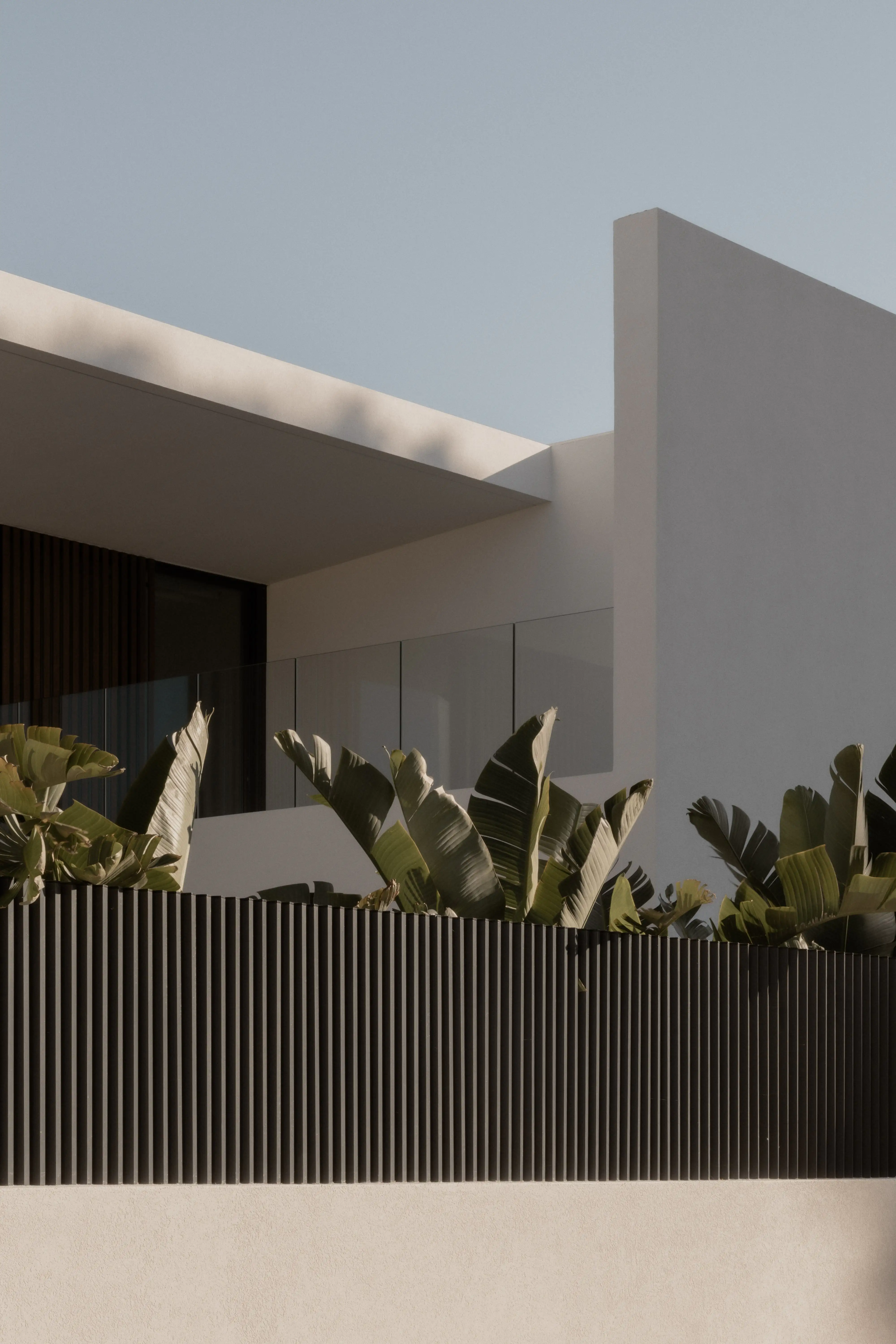
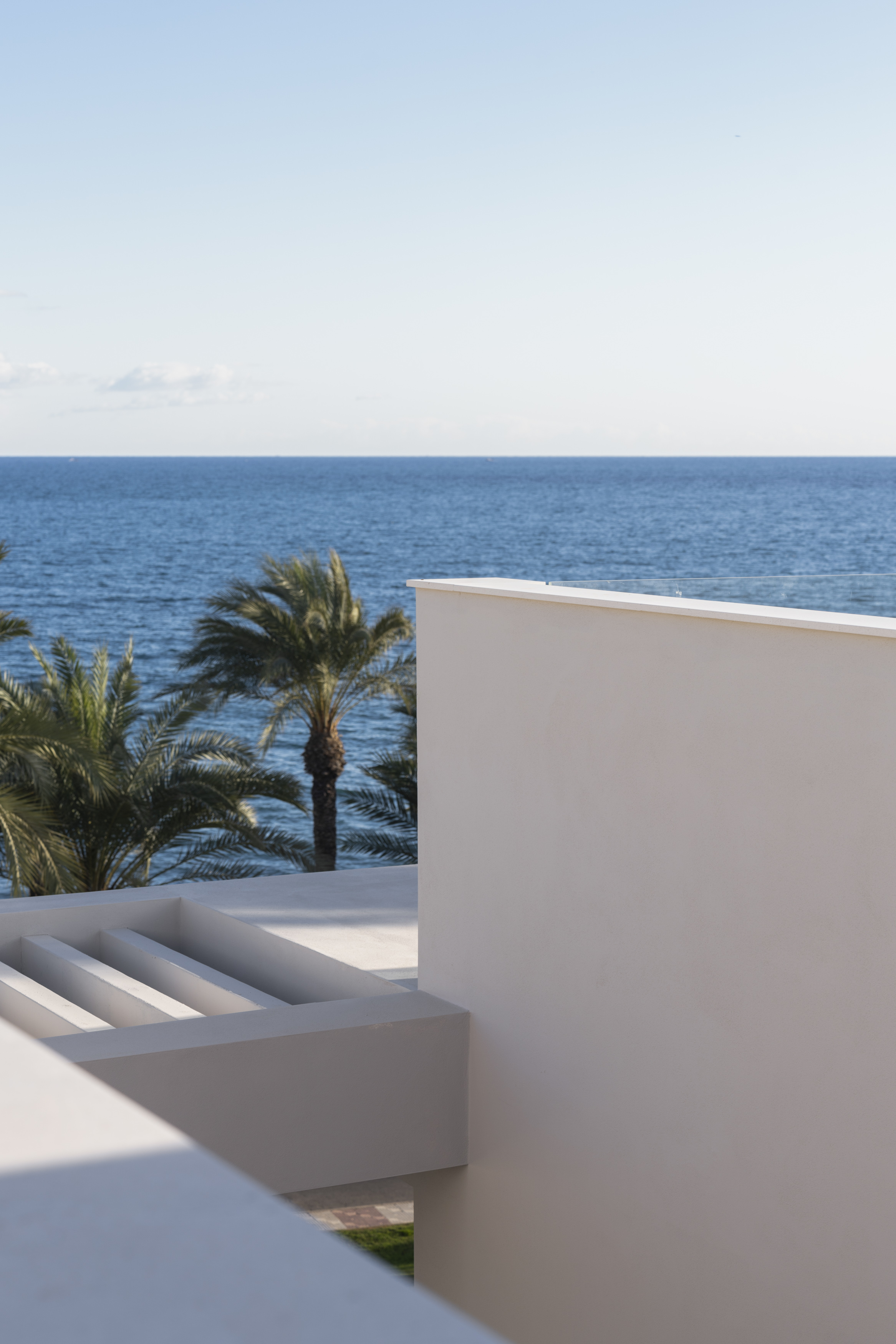
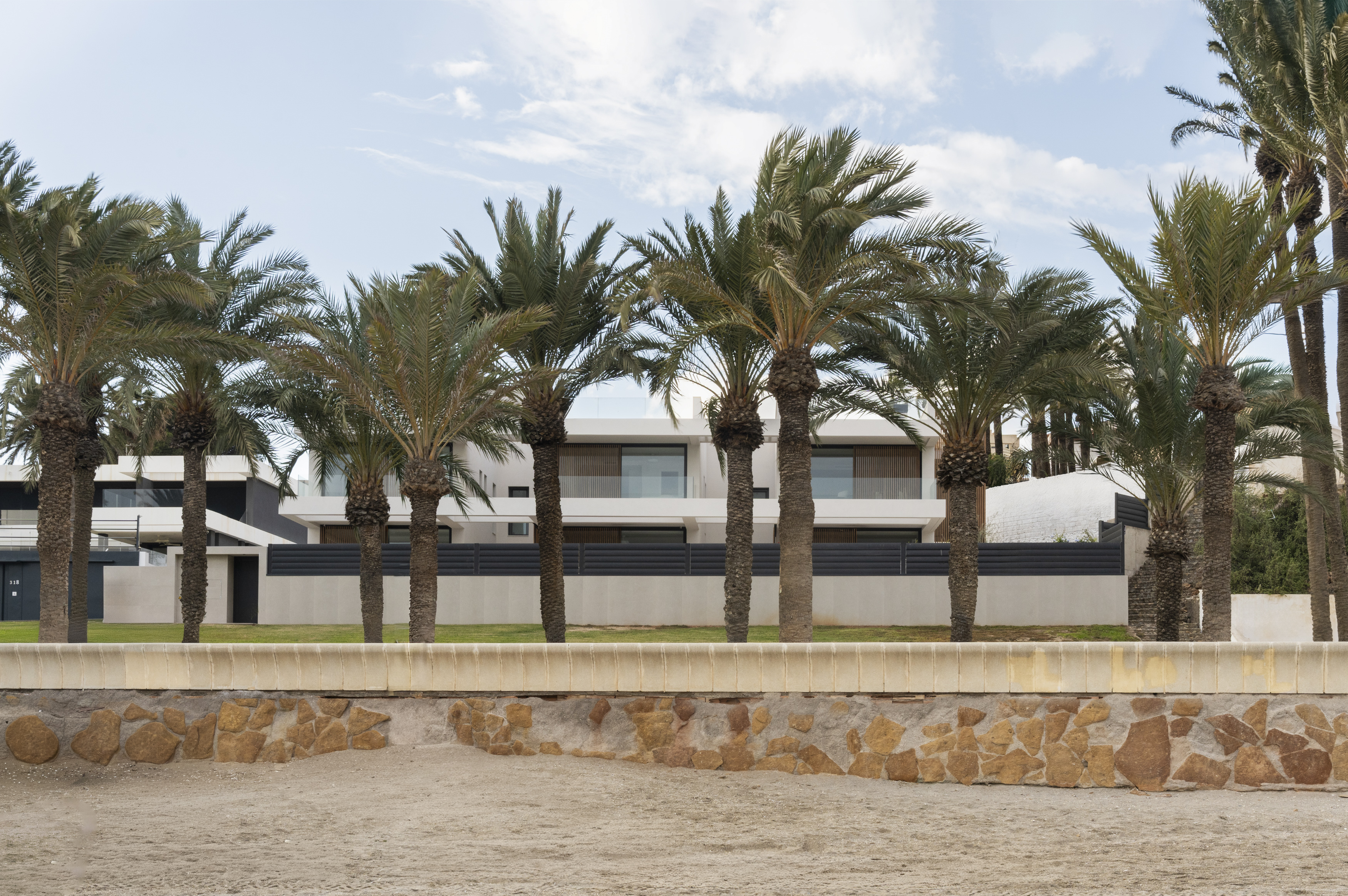
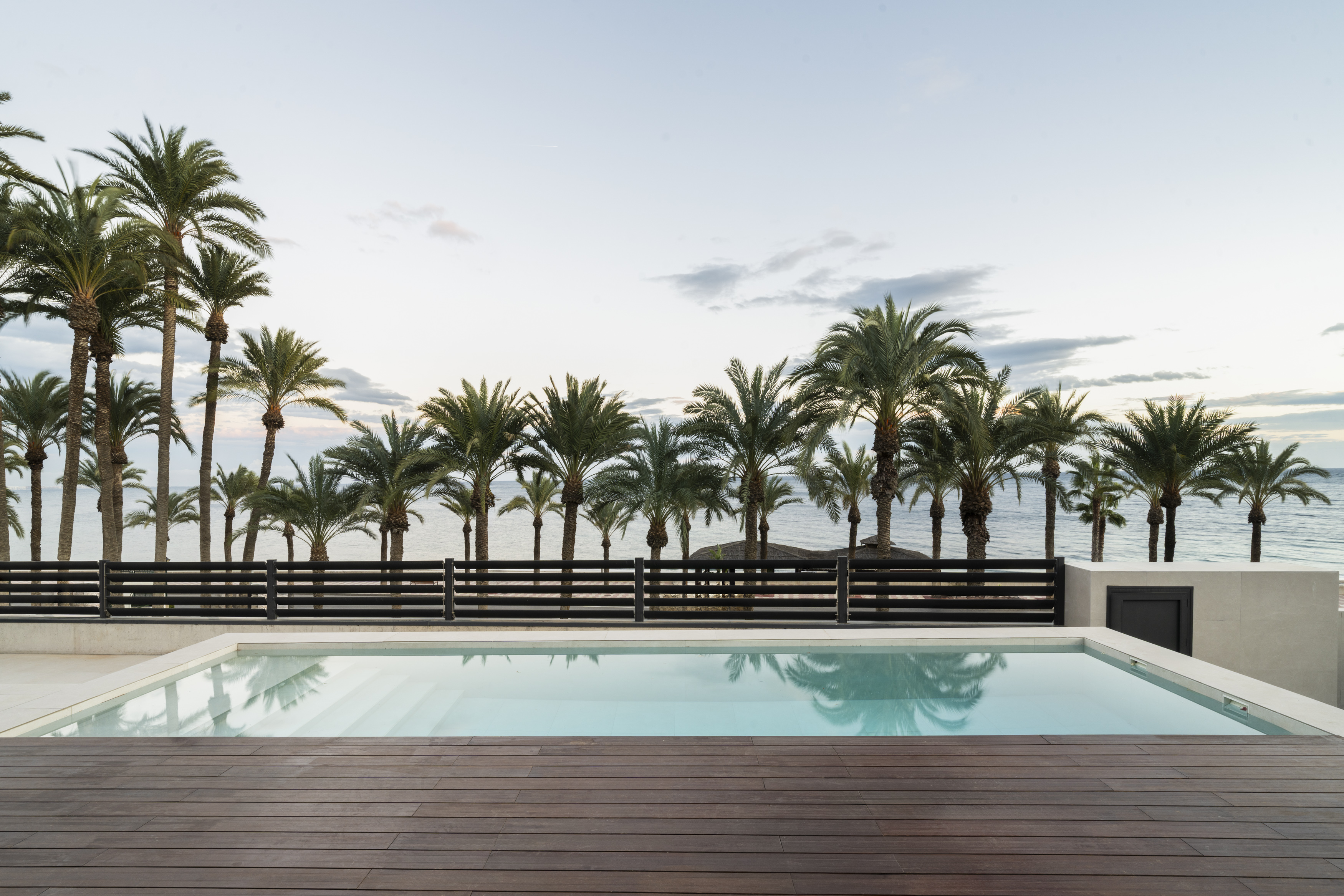
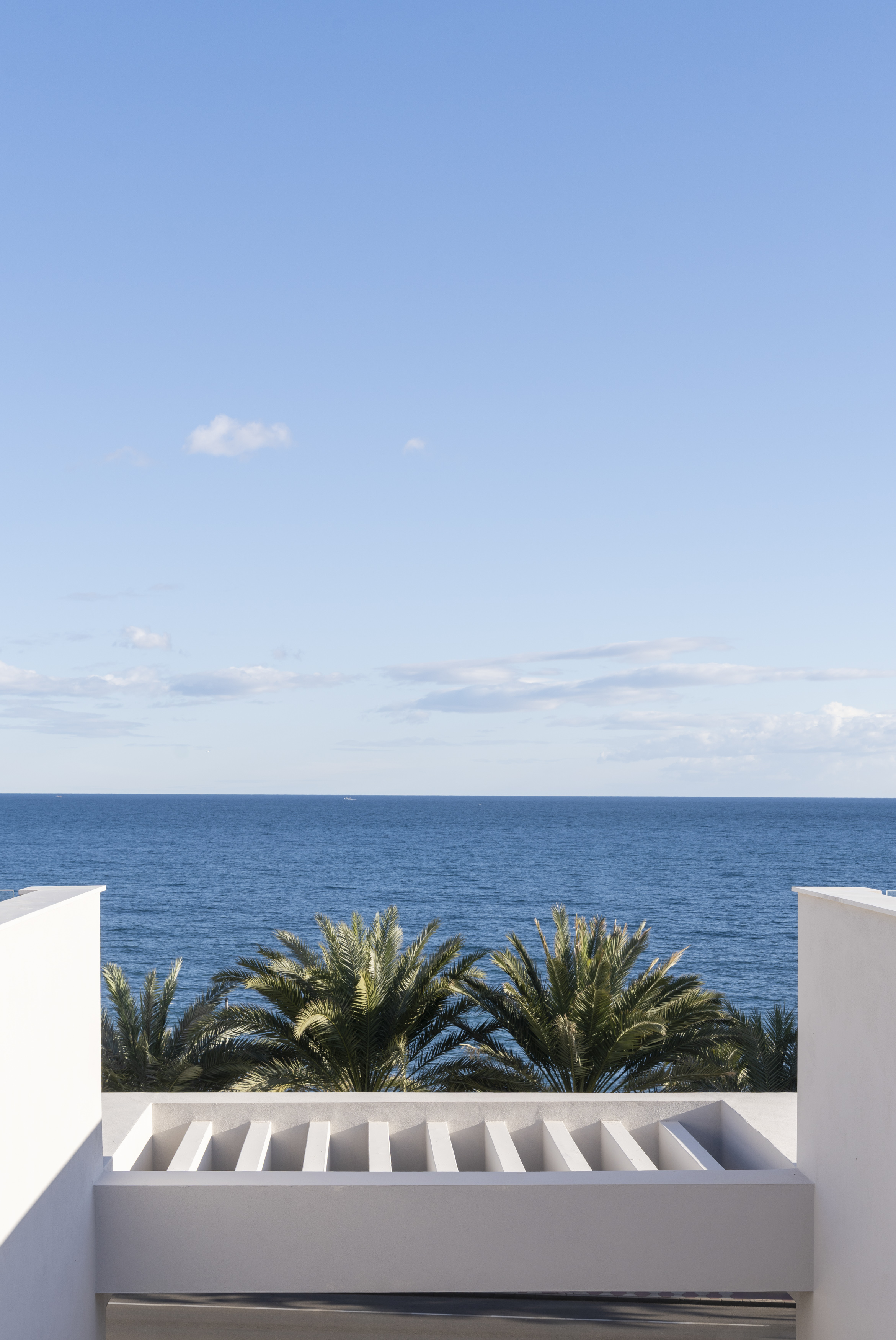
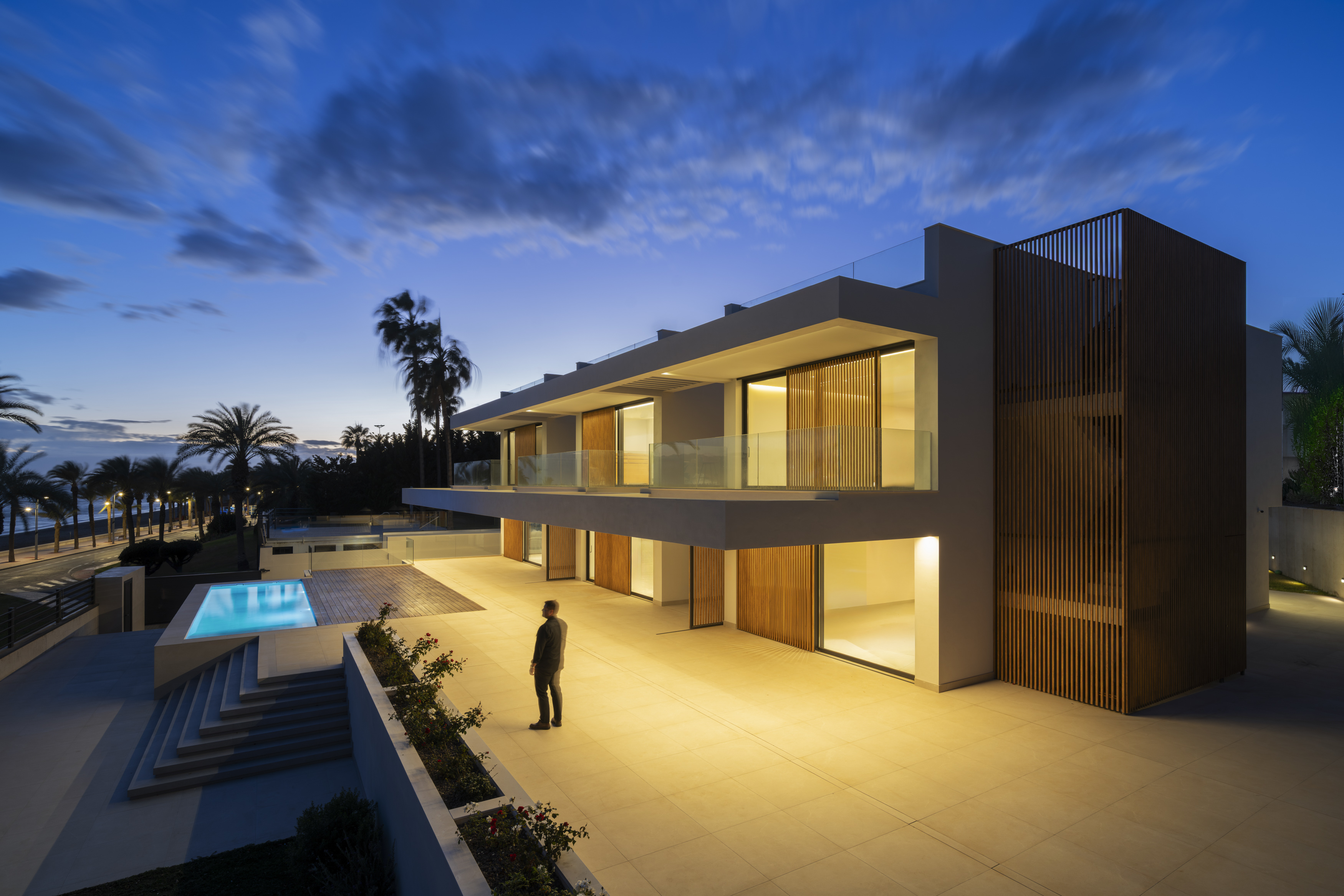
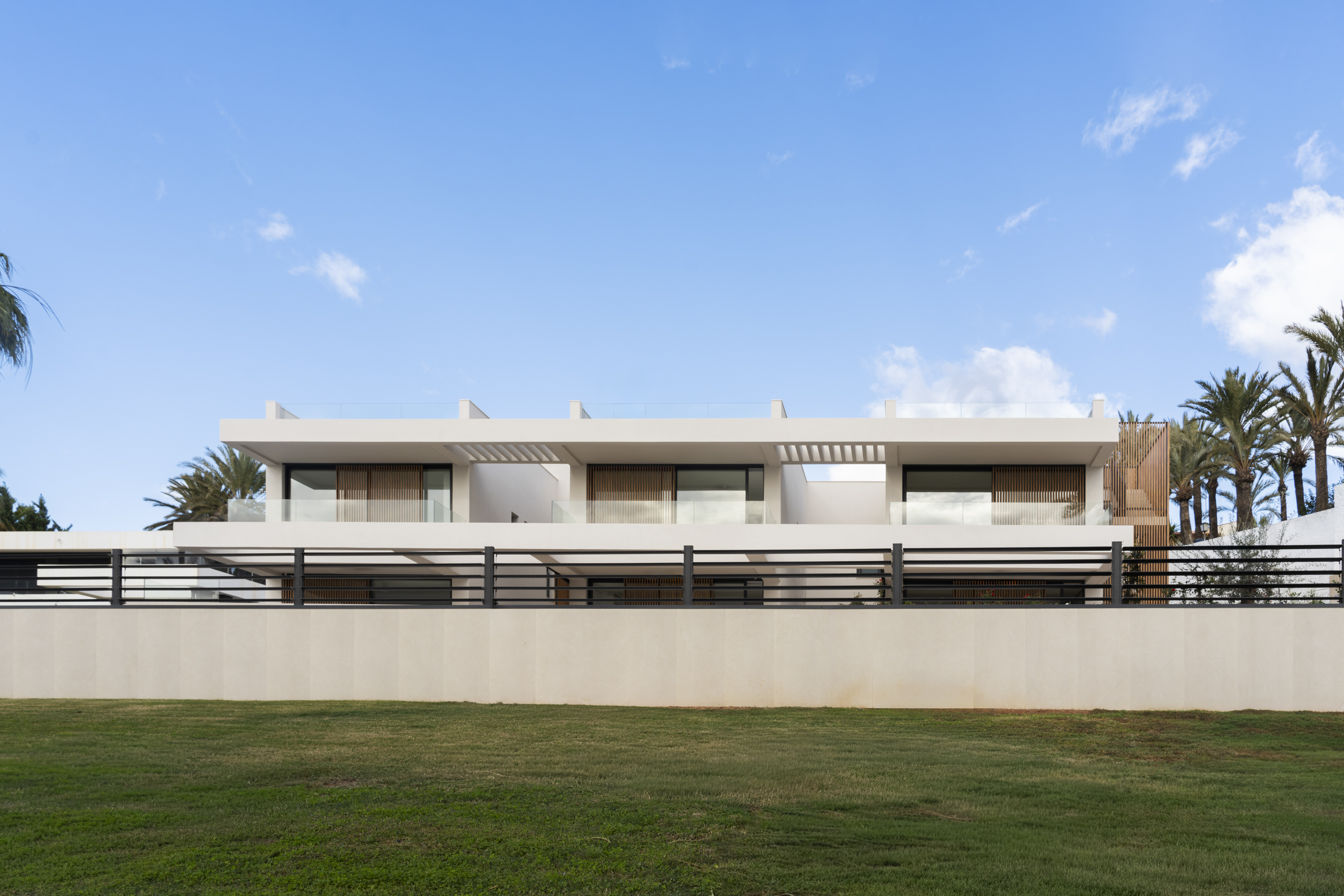
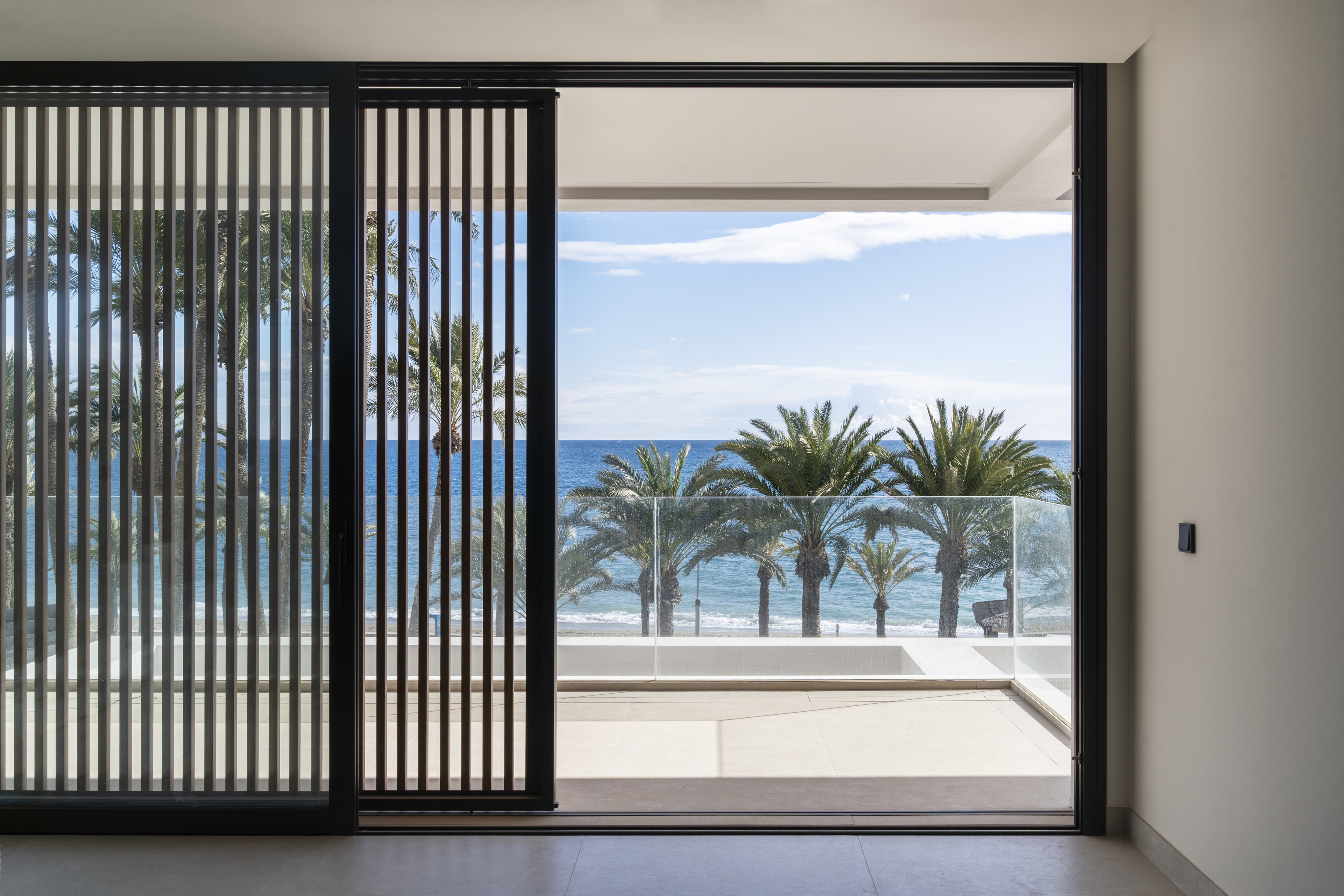
Aguadulce is a built place: promenade, palm trees, urban rhythm, and a coastline experienced on foot. The residence joins this order without competing with it. It neither hides nor displays itself. It assumes the public condition of the seafront and transforms it into a precise domestic edge, capable of looking toward the sea naturally while maintaining the calm inherent to a home.
The project emerges from a specific brief: a single summer residence for three siblings and their families. The ambition was not "to build three houses" but to build one capable of hosting three ways of inhabiting, with variable degrees of privacy. In summer, coexistence is measured in details: a conversation, a sideways glance at the sea, quiet reading, a family meal, a return from the beach. The architecture responds with clarity and efficiency: an organization that separates and brings together depending on circumstance.
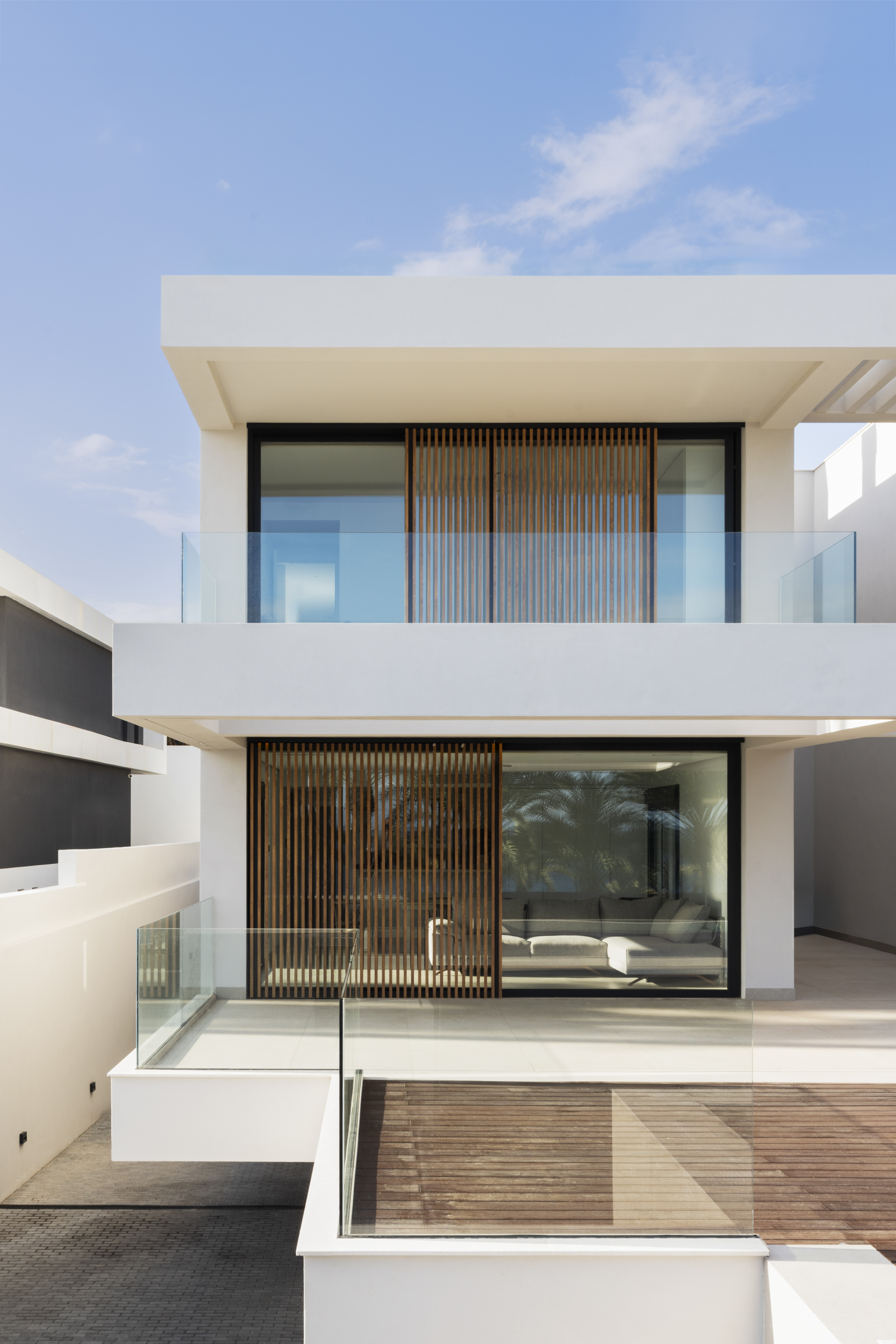
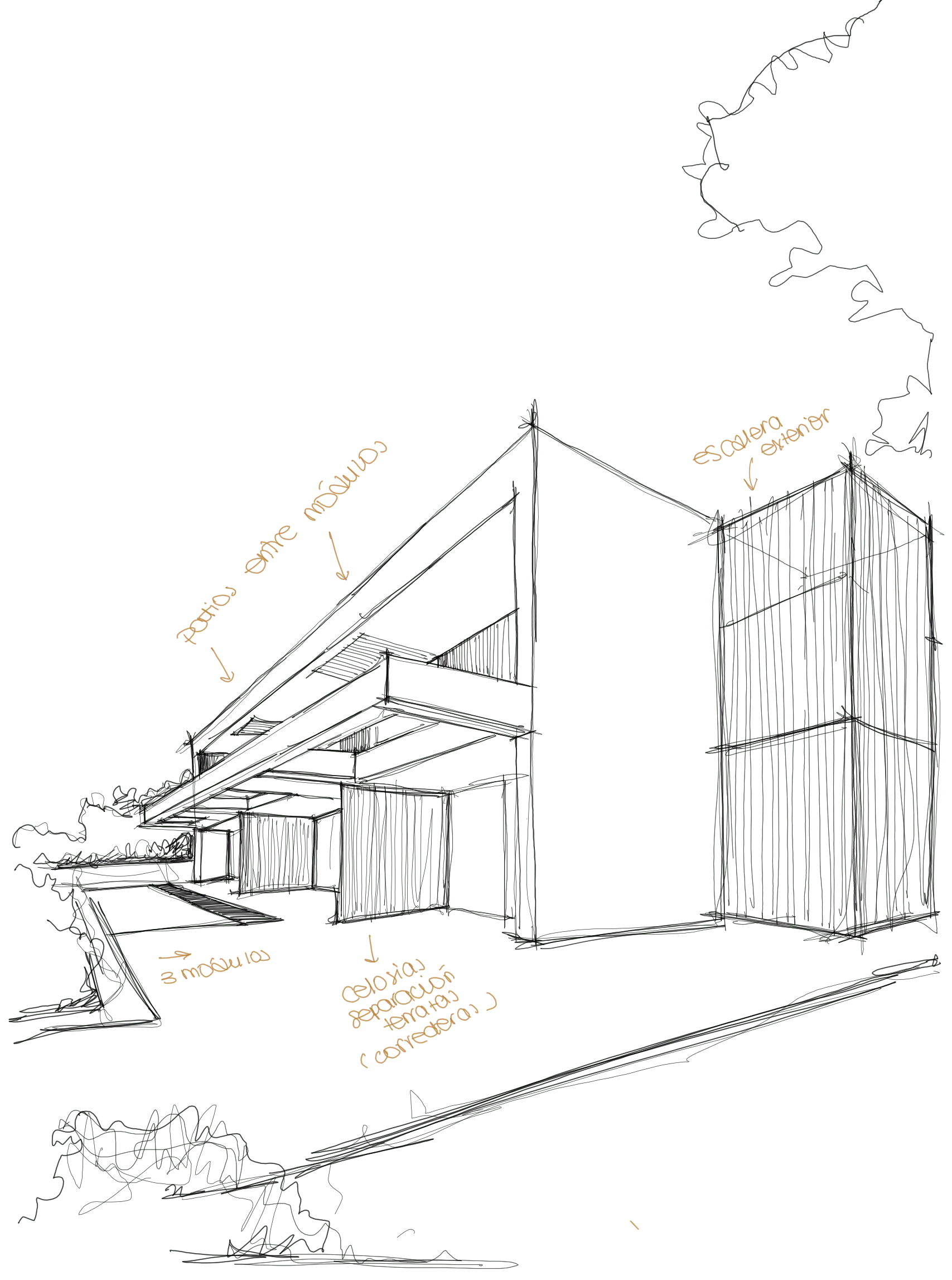
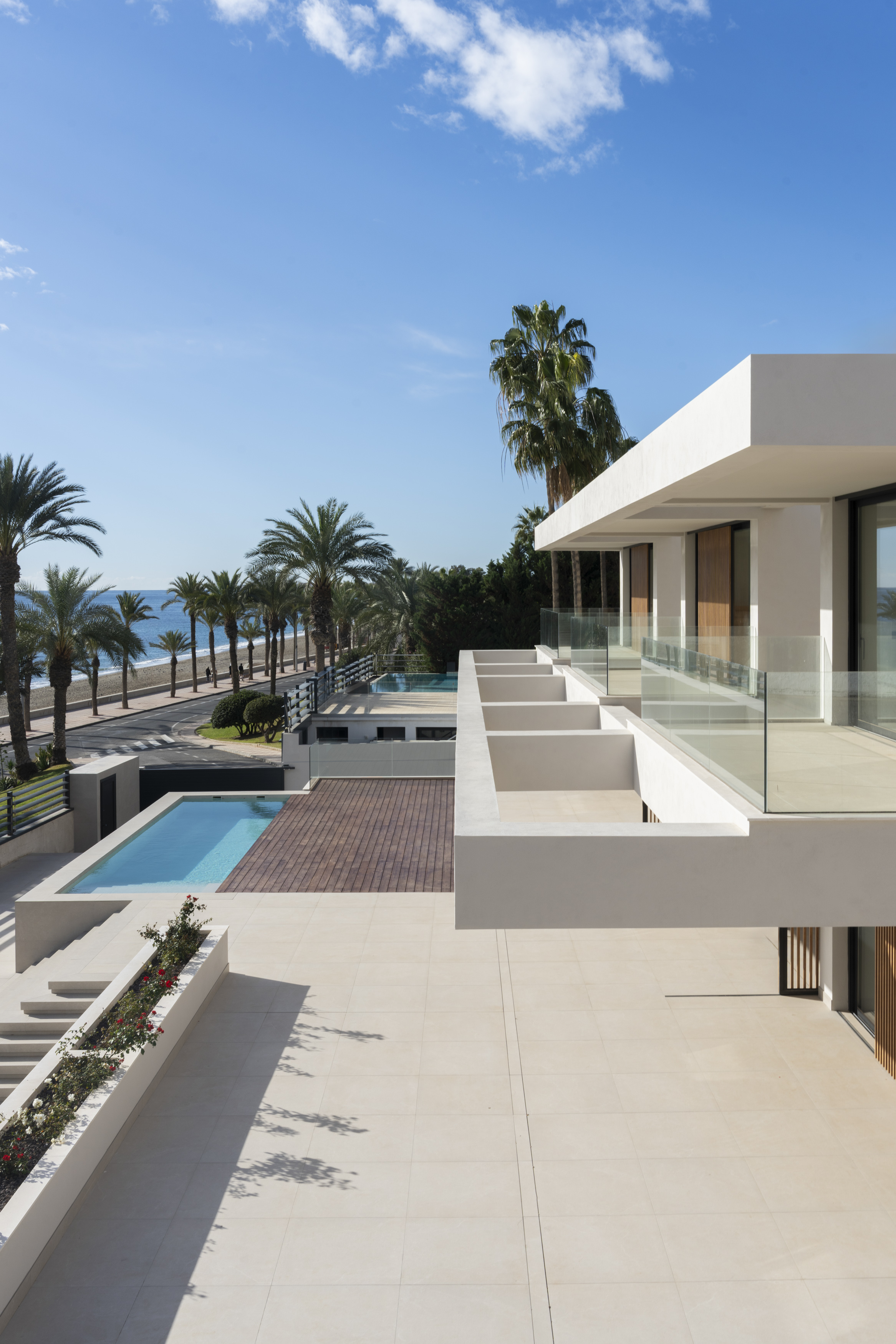
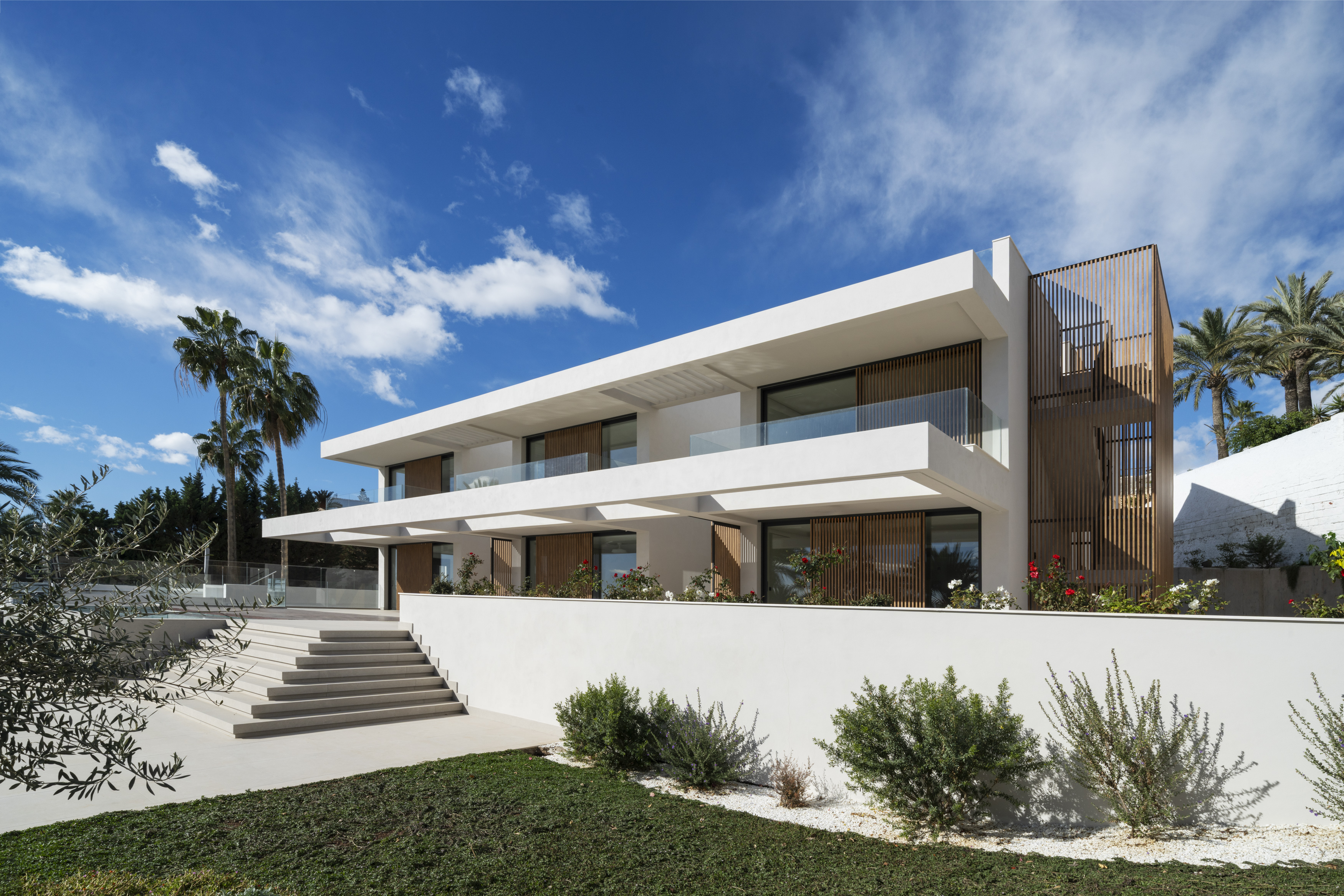
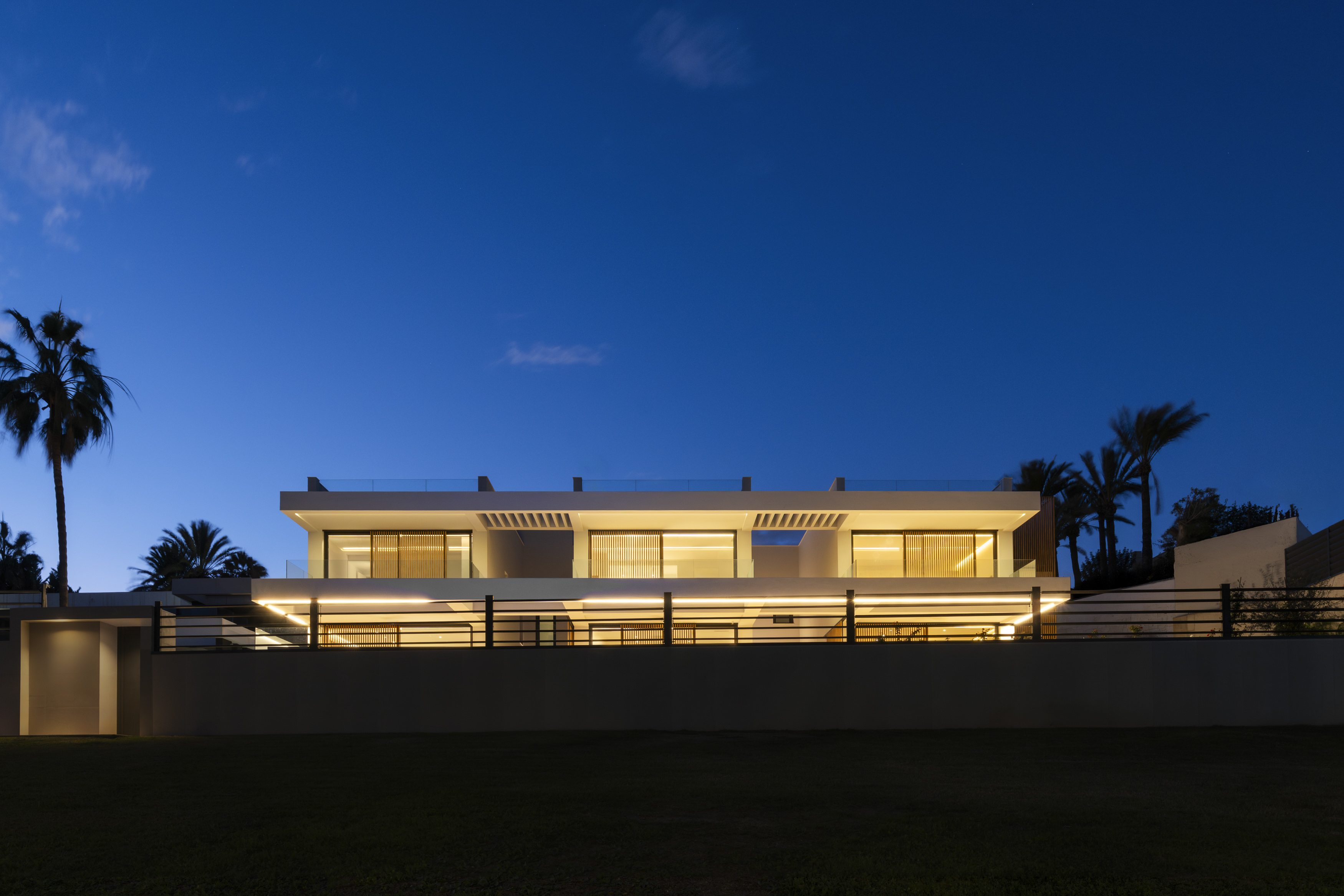
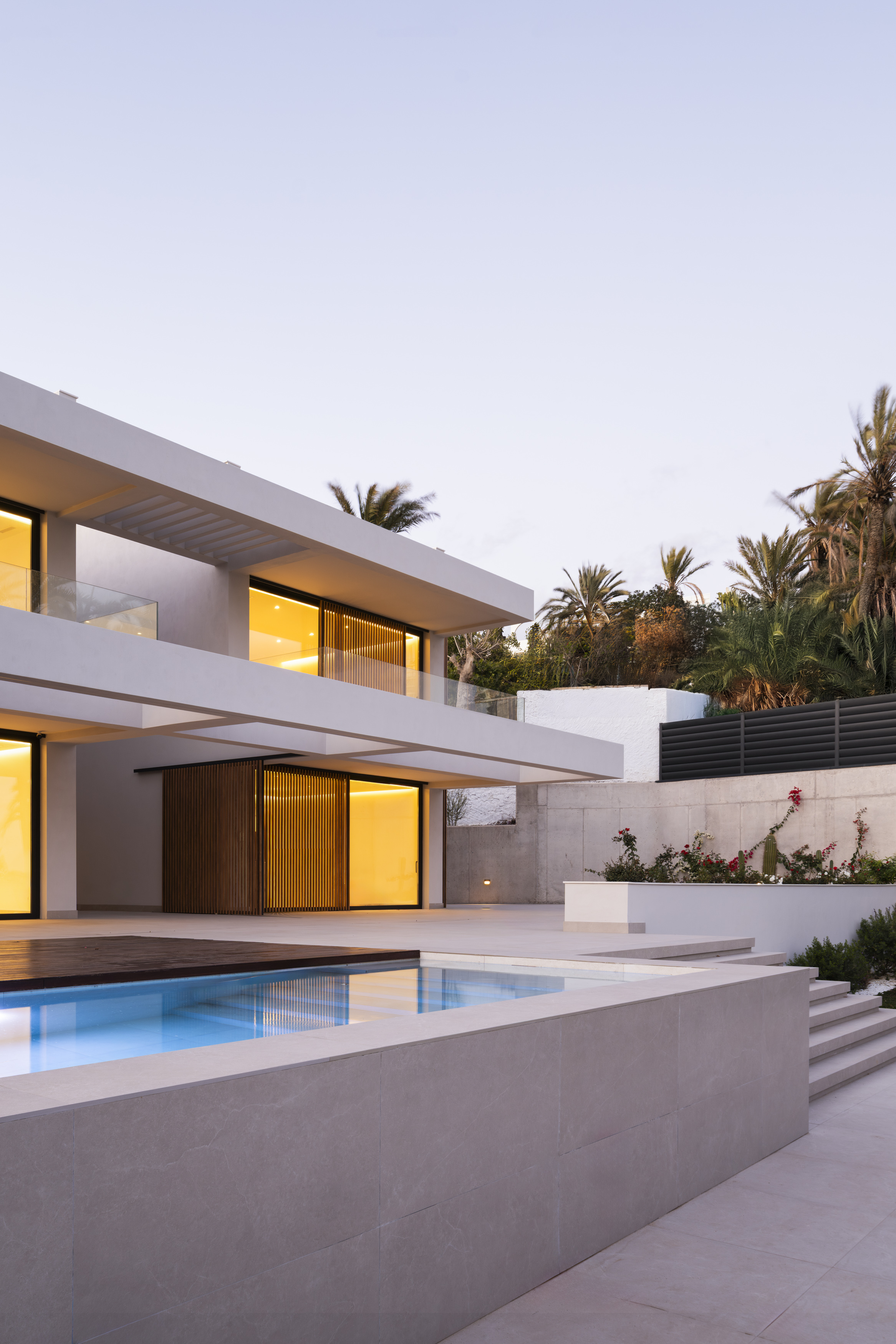
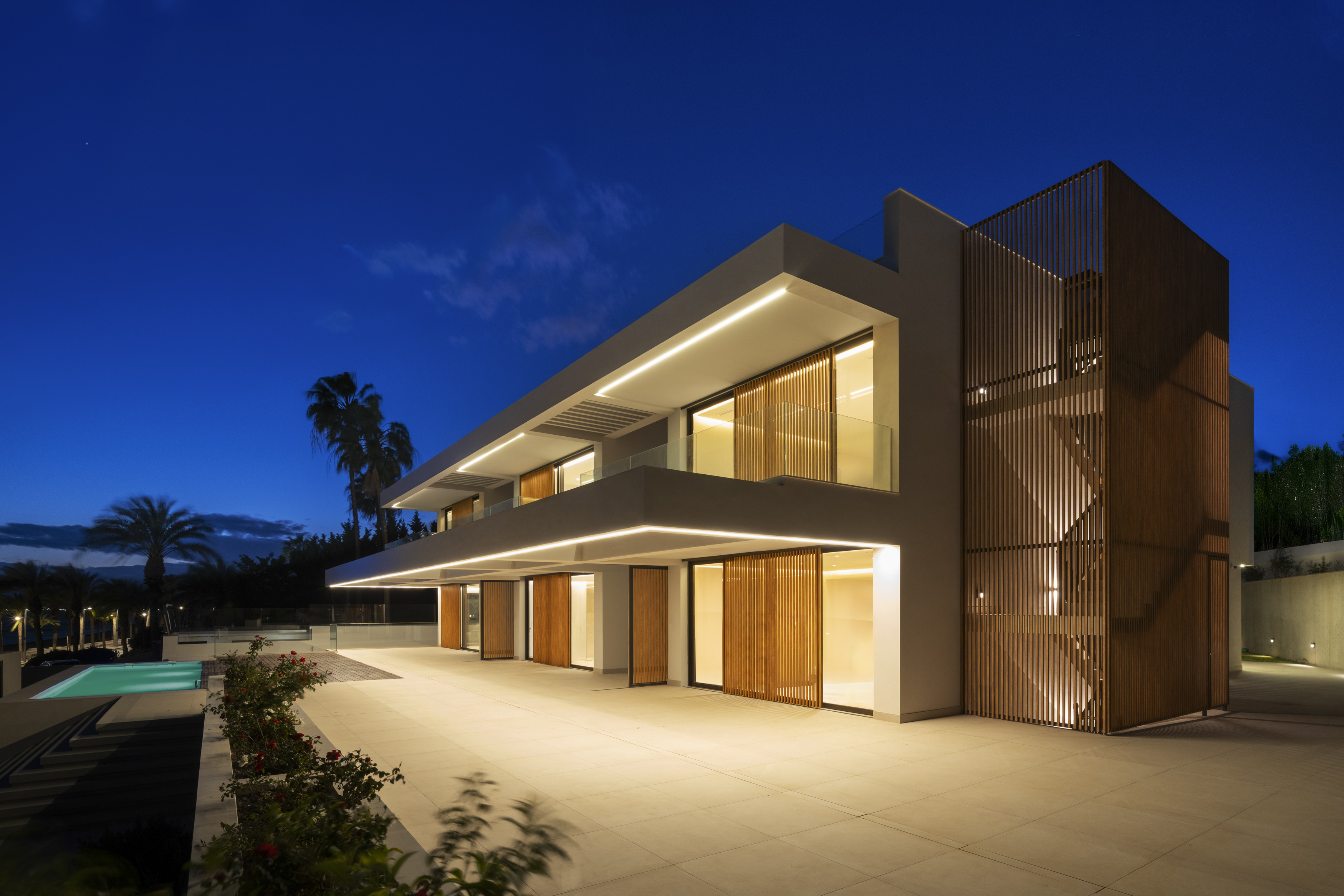
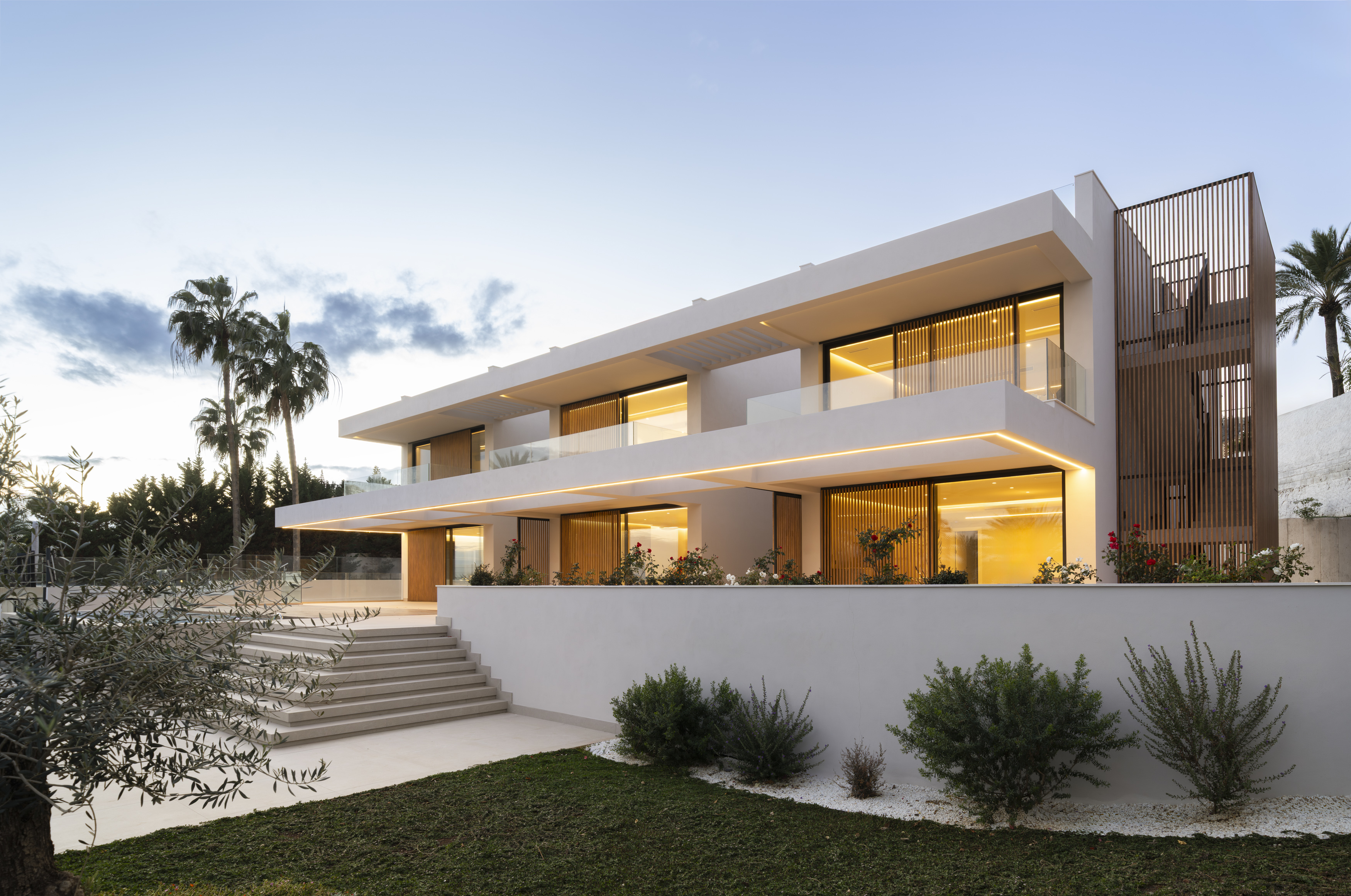
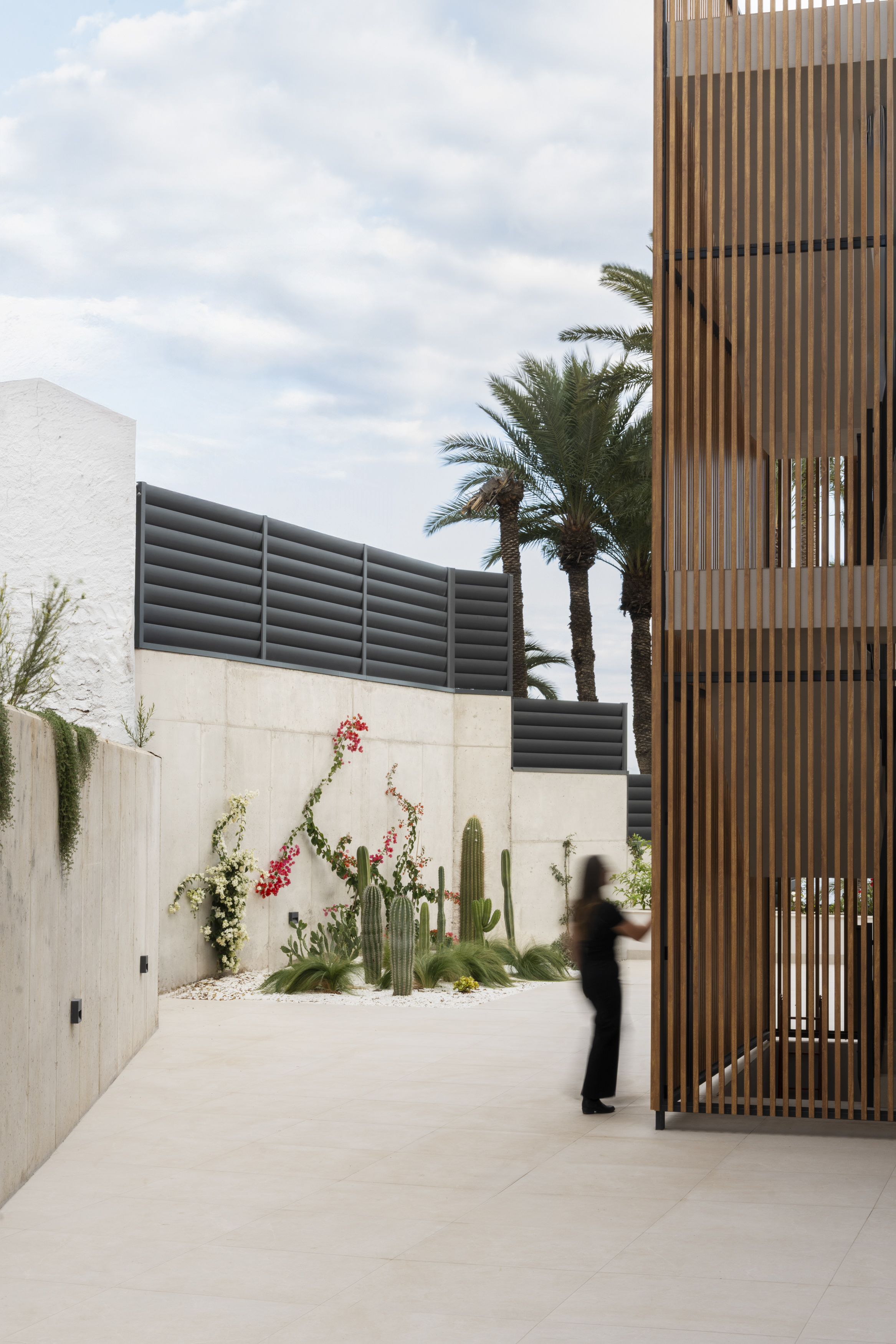
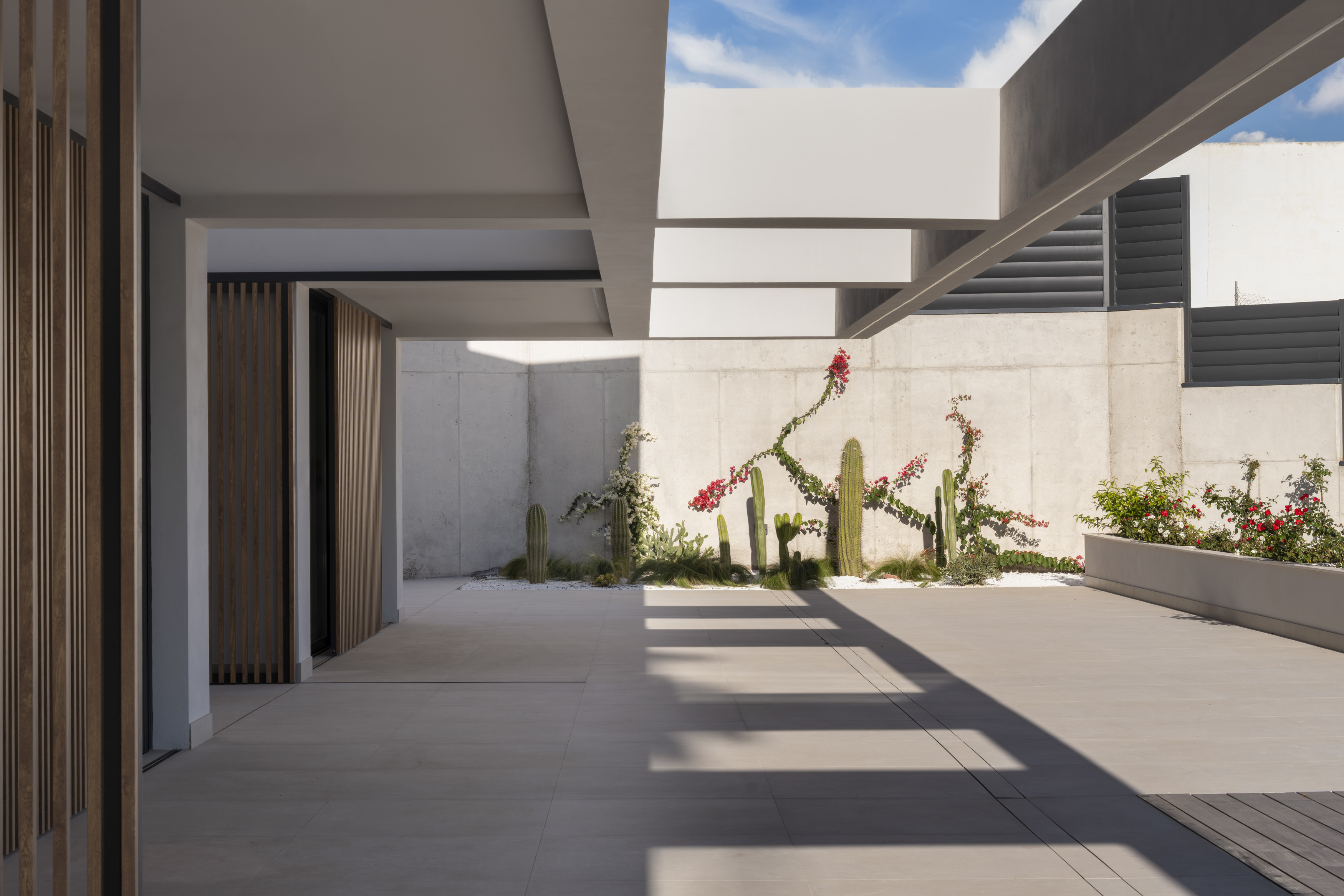
The house is ordered like a comb: three equivalent modules open toward the sea and interleave with private patios. These patios are not filler gardens but active pieces: they double the facade surface, guarantee ventilation and light, and most importantly introduce distance between spaces, preventing acoustic and visual interference. Connection between modules occurs at the rear, through a band of services and circulation that stitches the whole together without invading the intimate zones and opens onto a more protected rear patio where the house breathes at a different scale.
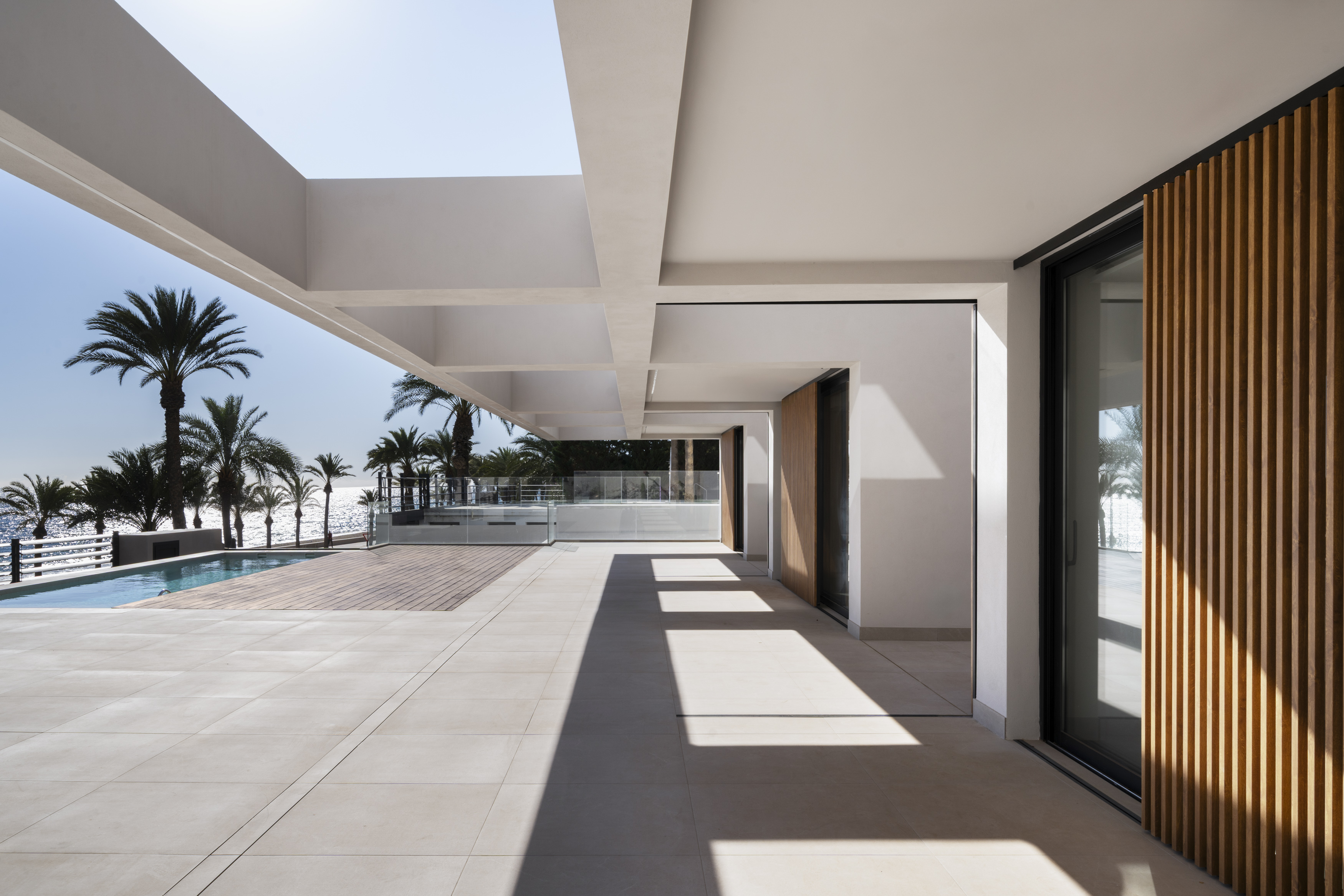
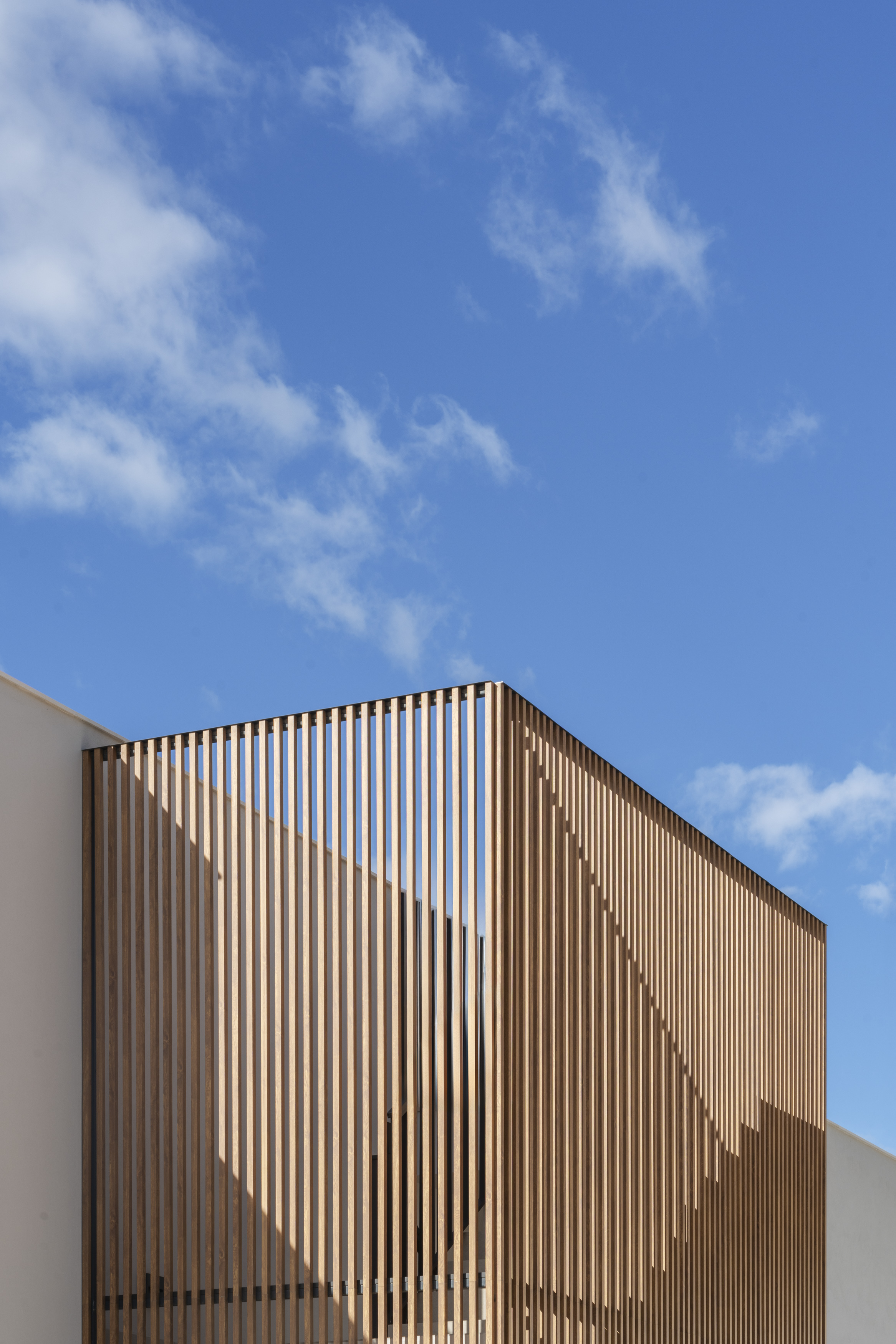
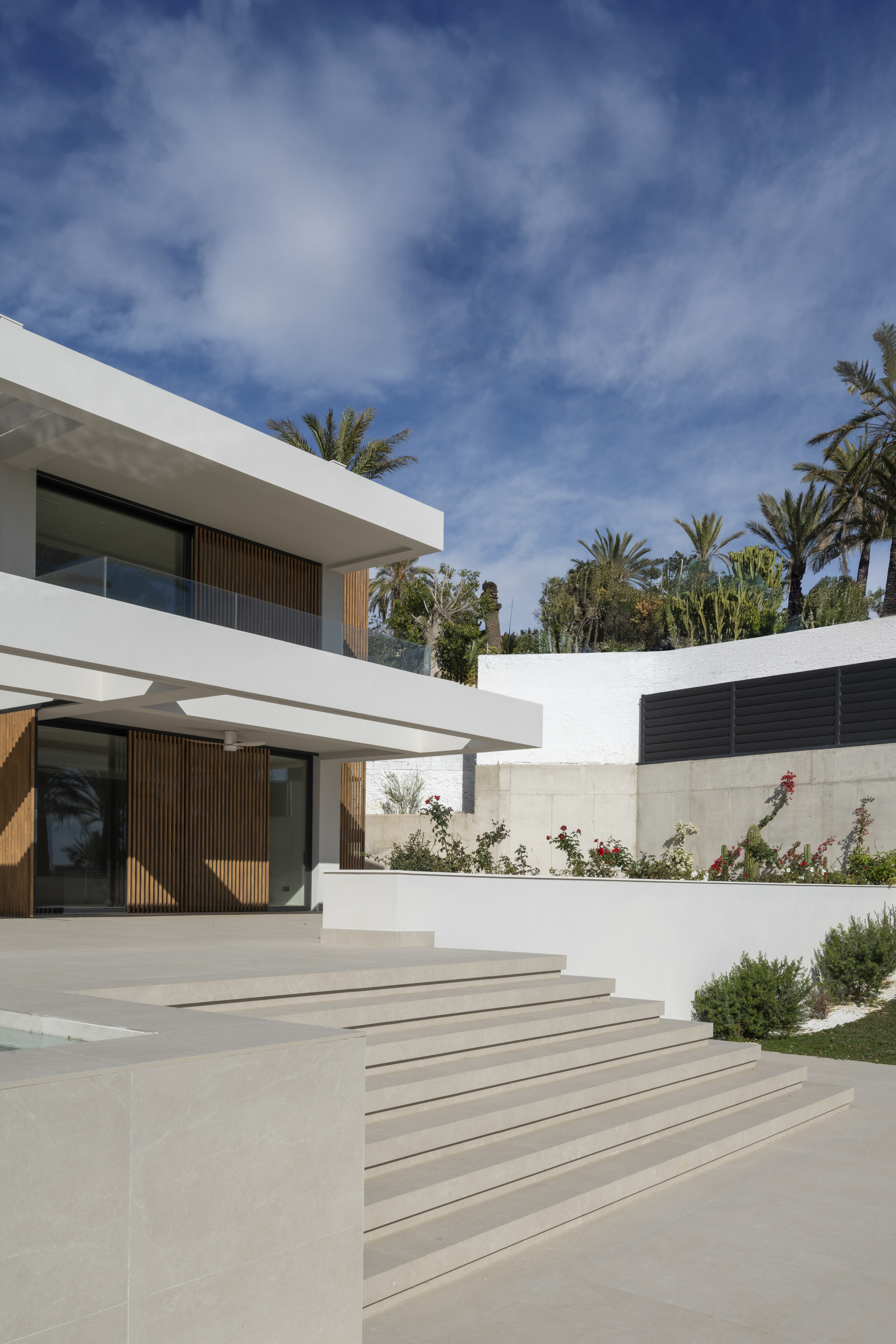
If the floor plan organizes, the project reveals itself through rhythm. Everything is modulated: structure, openings, patios, screens, porches. This meter, composed specifically for this house, gives unity to diversity and allows variation without losing coherence. In section, a cantilever creates deep porches through exposed beams. This mechanism makes exterior living possible, controls solar gain, and defines a facade where shadow has depth and privacy projects itself.
Localización
Roquetas de Mar
Estado
Built
Fecha inicio del proyecto
2021